

If you are new to riding or have trouble balancing, you may be asking: can you put training wheels on an electric bike?
The short answer is yes, but only on some e-bikes. Training wheels, also called stabilizer wheels, must fit the bike’s rear axle, frame, brakes, tire size, and total weight. They also need to be strong enough for the rider and the e-bike together.
Before adding training wheels to an electric bike, it is important to understand what they can help with, what they cannot do, and when a more stable e-bike design may be a better choice.

Can You Put Training Wheels on an Electric Bike?
You can put training wheels on some electric bikes, but not every e-bike is a good fit. E-bikes are usually heavier than regular bicycles, and many models have hub motors, disc brakes, fat tires, motor cables, or special axle hardware near the rear wheel.
That makes compatibility very important. A training wheel set that works on a regular bike may not fit or support an electric bike safely. Before buying one, check both the e-bike specifications and the training wheel manufacturer’s instructions.
If you are unsure, ask a local bike shop to inspect the setup before riding. A poorly fitted set of training wheels can affect turning, braking, and stability.
What Are Training Wheels for Electric Bikes?
Training wheels are extra side wheels attached near the rear wheel of a bike. Their purpose is to add side support at low speed and help reduce tipping when the rider leans too far.
On an electric bike, training wheels work in a similar way, but the setup is more demanding. The motor, battery, and stronger frame can add weight. The rider may also be moving faster than on a regular bicycle.
It is also important to know that training wheels do not turn an e-bike into a true electric tricycle. A tricycle is designed with three wheels from the start. Training wheels are aftermarket support, so they have limits.
Who Might Need Training Wheels on an E-Bike?
Some riders look for e-bike training wheels because they want extra support while learning. This may include adults who never learned to ride a bike, riders returning after many years, or people who feel nervous starting and stopping.
You are new to riding a bike
If you are a beginner, training wheels may help you feel supported during slow practice. They can make it easier to focus on steering, braking, and using the pedals.
However, a regular bicycle is often easier for first-time balance practice because it is lighter and does not have motor assistance. If you start with an e-bike, use the lowest assist level and practice in a safe, open area. You can also read our beginner e-bike tips before your first ride.
You have difficulty balancing
Training wheels may add support when riding slowly on flat ground. This can help some riders feel more confident while getting used to the bike.
They do not fully teach balance, though. If balance is a serious concern, a true electric tricycle, adaptive bike, or professional riding support may be a safer option than adding training wheels to a standard e-bike.
You are an adult learning to ride
Adult riders often need a different setup than children. Adult training wheels must support more weight, and they need to stay stable under the weight of the rider, bike, battery, and any cargo.
For adult beginners, it also helps to choose the right bike size. A bike that is too tall or too hard to control can make stopping and starting feel more stressful. Our guide on how to size an e-bike can help you check height, inseam, and frame fit.
Benefits of Using Training Wheels on an Electric Bike
Training wheels are not the right choice for every rider, but they may help in certain situations. The key is to use them slowly, on the right surface, and with a compatible e-bike.
They may add low-speed support
Training wheels can help support the bike when the rider leans too far to one side. This is most useful at low speeds, during short practice sessions, or when starting and stopping.
They are less useful at higher speeds because turning and leaning are part of normal bike control. Riding too fast with training wheels can make the bike feel awkward or unstable.
They may build confidence
For some riders, the hardest part is not pedaling. It is the fear of tipping over. Training wheels can reduce that fear during early practice.
Confidence matters, especially for adults who are learning later in life. Still, the goal should be steady control, not relying on the extra wheels forever.
They may help some riders practice basic bike handling
Training wheels can give a rider time to practice steering, braking, mounting, and dismounting. These basic skills are important before riding near traffic or other people.
When practicing on an e-bike, keep the motor support low. A lower pedal assist level helps reduce sudden acceleration and gives you more time to react. If you are still learning how assist and throttle work, this guide on pedal assist and throttle can help.
What to Check Before Installing E-Bike Training Wheels
Not every electric bike can safely use training wheels. Before buying a set, check the bike and the training wheel instructions carefully.
- Rear axle type: Some e-bikes use hub motors, special axle hardware, or motor cables near the rear wheel. Make sure the bracket can be installed without damaging anything.
- Brake clearance: The training wheel bracket should not touch or block disc brakes, brake cables, rotors, or calipers.
- Tire size and width: Fat tire e-bikes may need wider or stronger stabilizer wheels. A narrow training wheel set may not sit correctly.
- Total weight: Add the rider weight, bike weight, battery, and cargo. The training wheels must support the full load.
- Frame compatibility: Some frames do not have enough mounting space for aftermarket training wheels.
- Riding surface: Training wheels work best on flat, smooth ground. They are not ideal for downhill riding, sand, loose gravel, or uneven trails.
If any part of the setup looks forced, do not ride the bike. Training wheels should not bend, rub, shift, or interfere with the rear wheel.
When Training Wheels May Not Be a Good Idea
Training wheels can add support, but they are not safe for every e-bike or every rider. They may not be a good choice if you plan to ride fast, turn sharply, carry heavy cargo, or ride on uneven surfaces.
E-bikes are heavier and faster than regular bicycles. Weak or poorly fitted training wheels can create more problems than they solve. They can also change how the bike turns, especially if one side touches the ground before the other.
Avoid using training wheels on steep hills, downhill routes, sand, loose gravel, wet surfaces, or crowded paths. For general riding habits, our e-bike safety tips cover simple ways to ride more safely.
Better Alternatives to Training Wheels for Some Riders
If your main concern is balance or confidence, training wheels are not the only option. Some riders may feel safer with an e-bike that is easier to mount, easier to control, and more stable at low speed.
| Rider Concern | Possible Option | Why It May Help |
|---|---|---|
| Hard to get on and off the bike | Step-through frame | A lower frame opening makes mounting and stopping easier. |
| Nervous on rough pavement | Fat tires | Wider tires add more ground contact and can make the ride feel steadier. |
| Sudden acceleration feels scary | Lower pedal assist level | Less motor power gives new riders more time to react. |
| Bike feels too tall or stretched out | Better frame fit | The right size helps with control, stopping, and comfort. |
| Serious balance concerns | Electric tricycle or adaptive bike | A bike designed with three wheels is more stable than add-on training wheels. |
For older riders, comfort and stability can matter more than speed. This guide on cycling for seniors explains why some riders may prefer a more stable setup.
Tips for Using Training Wheels on an Electric Bike
If you decide to use adult training wheels on an e-bike, take your time with setup and practice. A careful start is better than trying to ride normally right away.
Choose the proper set of training wheels
The training wheels should match your e-bike’s wheel size, tire width, frame, and load requirement. Do not choose a set only because it says “adult” on the package.
Look for a clear weight rating. Remember that the total weight includes the rider, the e-bike, the battery, and any cargo. A stronger set is usually better than one that is barely within the limit.
Install them correctly
Follow the training wheel manufacturer’s instructions. Make sure the mounting brackets are tight, straight, and clear of the brakes, motor cable, chain, and rear wheel.
Both support wheels should be positioned evenly. If the wheels are uneven or loose, the bike may pull to one side or feel unstable when turning.
Start with the lowest assist level
Do not start with high pedal assist or full throttle. Use the lowest assist level first, then practice starting, stopping, and turning in a flat open area.
If the bike has a throttle, use it gently. Sudden motor power can surprise new riders, especially when training wheels are already changing the way the bike handles.
Ride on flat, smooth ground
Training wheels work best on flat pavement or a smooth open area. Avoid hills, curbs, sand, trails, and uneven ground.
Practice slow turns before riding farther. Training wheels can change the way the bike leans, so turning may feel different from a regular two-wheel bicycle.
A Stable E-Bike Option for New Riders
If you are looking at training wheels because you want more confidence, it may also help to choose an e-bike that feels stable from the start.
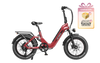
Ranger 3.0 Pro is a step-through folding fat tire e-bike. The step-through frame makes it easier to get on and off, while the fat tires help add comfort and stability on mixed roads.
It also uses a torque sensor, which responds to how hard you pedal. This can make the ride feel smoother and more natural than a simple on-and-off assist feeling. It is not a replacement for medical balance support, but it can be a practical option for riders who want a more confident everyday ride.
Conclusion
Training wheels can be added to some electric bikes, but they are not a one-size-fits-all solution. Before installing them, check the axle, frame, brakes, tire width, total weight, and riding surface.
They may help some riders feel supported during slow practice on flat ground. However, they do not fully teach balance, and they do not turn a regular e-bike into a true electric tricycle.
If you are a beginner, start slowly, use low pedal assist, and practice in a safe open area. If balance is a serious concern, consider a more stable bike design or speak with a local bike shop before riding.
FAQs
Can you put training wheels on an electric bike?
Yes, some electric bikes can use training wheels, but not all models are compatible. You need to check the rear axle, frame, brakes, tire size, bike weight, rider weight, and the load rating of the training wheels.
Are training wheels safe for electric bikes?
Training wheels may add support on flat, slow rides, but they are not safe for every e-bike or rider. Poorly fitted training wheels can interfere with braking, turning, or stability, especially on heavy or fast e-bikes.
Do training wheels fit all e-bikes?
No. Some e-bikes have hub motors, disc brakes, fat tires, motor cables, or frame designs that make training wheels hard to install safely. Always check the bike and training wheel manufacturer’s instructions.
What are stabilizer wheels for electric bikes?
Stabilizer wheels are another name for training wheels. They add side support to help reduce tipping at low speed, but they do not turn an e-bike into a true electric tricycle.
Can adults use training wheels on an electric bike?
Some adults can use training wheels on compatible e-bikes, but the wheels must be rated for the rider and bike weight. Adults should also practice slowly on flat ground and avoid sharp turns or rough surfaces.
Are adult training wheels good for learning to ride?
They may help some adults feel supported, but they do not fully teach balance. Many beginners learn better by starting on a regular bike or using a low pedal assist level in a safe, open area.
Can you put training wheels on a fat tire e-bike?
Only if the training wheels are designed to fit the tire width, axle, frame, and weight of the fat tire e-bike. Many standard training wheels are not wide or strong enough for fat tire electric bikes.
What is a better option than training wheels for adults?
For some adults, a step-through e-bike, fat tires, lower pedal assist, proper frame size, or an electric tricycle may be a better choice. It depends on the rider’s balance, confidence, and riding environment.


Share:
How Far Can Electric Bikes Go on a Full Charge?
24-Inch Electric Bikes: Everything You Need to Know
2 comments
Dear Madam, thank you for your message! We completely understand your concern.
The advice to avoid steep hills is just a general safety tip, especially for new riders. No worries—your e-bike is absolutely capable of going over a bridge. Just make sure to use pedal assist, and you’ll be fine. Enjoy your ride and take care!
ik ben een 75 jarige vrouw. en ik lees bij : Waar te rijden …. "probeer hellingen re vermijden "….maar tijdens een fietstocht moet ik een brug op . groetjes.