

Quick Answer: Can a 300 lb Person Ride an Electric Bike?
Yes. A 300 lb person can ride an electric bike, but the bike needs to be chosen with the full riding load in mind. That means looking at the rider’s weight, any cargo, accessories, terrain, braking power, tire support, frame strength, and how much range is needed for daily rides.
For riders around 300 lbs, a folding e-bike with a 400+ lb or 440 lb max load usually leaves more practical room than a model rated close to 300 lbs. That extra margin becomes important once you add a backpack, lock, rear basket, groceries, work gear, or weekend cargo.
Folding e-bikes are no longer just for lighter riders or short casual rides. The right model can give heavier riders a compact, easy-to-store electric bike without giving up comfort, stability, or power. The key is to choose a folding e-bike that is built for more than just portability.
Best Heybike Options for 300 lb Riders at a Glance
| Model | Best For | Max Load | Why It Works for Heavier Riders | Keep in Mind |
|---|---|---|---|---|
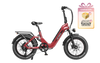
| Ranger 3.0 Pro | Best all-around choice | 440 lbs | Folding fat-tire frame, 720Wh battery, up to 90 miles of max range, full suspension, and 80 N·m torque sensor. | The best fit if you want more room for rider weight and daily cargo. |
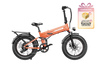
| Mars 3.0 | Power and value | 440 lbs | Compact folding fat-tire design, 624Wh battery, 65 miles max range, 95 N·m torque, and torque sensor. | A strong choice for riders who want folding convenience with higher load capacity. |
| Mars 2.0 | Budget-friendly folding option | 330 lbs | Folding fat-tire frame, 600Wh battery, 45 miles max range, and 100 N·m torque. | Better for riders around 300 lbs who carry little extra weight. |
| Horizon | Comfort-focused riding | 330 lbs | 24x4” fat tires, full suspension, 692Wh battery, and 55 miles max range. | Comfort is the main appeal, but cargo margin is limited for 300 lb riders. |
Why a Folding E-Bike Can Make Sense for Heavier Riders
A folding e-bike is worth considering if you want an electric bike that is easier to store, move, and fit into daily life. For riders who live in apartments, use elevators, store a bike in a garage corner, or carry an e-bike in an SUV or RV, folding design can make ownership much easier.
The main advantage is convenience. A folding frame can help reduce storage space at home, at work, or while traveling. It can also make the bike easier to manage in tight areas like bike rooms, hallways, elevators, and crowded parking spots.
For heavier riders, though, folding design should never be the only reason to choose a bike. A good folding e-bike for a 300 lb rider should still have a strong frame, secure folding hinge, suitable max load, reliable brakes, supportive tires, and enough motor and battery performance for the way you actually ride.
If storage and portability are important, start with Heybike’s folding electric bike collection and compare each model by max load, battery, brakes, tires, suspension, and torque.
Do Folding E-Bikes Have a Weight Limit?
Yes. Folding e-bikes have a max load or payload capacity, just like other electric bikes. The exact number depends on the model, frame design, wheels, tires, components, and how the bike is built.
For riders around 300 lbs, this number matters a lot. A bike that technically supports 300 lbs may not leave enough room for normal riding gear. A rider who weighs 300 lbs may also carry a backpack, lock, water bottle, phone mount, rear basket, groceries, work bag, or outdoor gear.
This is why a higher max load can be useful. It gives the rider more practical room for everyday use instead of putting the bike close to its limit every time it is ridden.
Payload Capacity vs Rider Weight: What’s the Difference?
Rider weight is your body weight. Payload capacity usually refers to the total weight the bike is designed to carry. That can include the rider, cargo, accessories, bags, baskets, locks, groceries, tools, and anything else placed on the bike.
For example, a 300 lb rider on a bike with a 330 lbs max load may only have a small amount of room left for cargo. That might be fine for short rides with no extra gear, but it can feel limiting for commuting, errands, hills, longer rides, or weekend trips.
| Max Load Rating | What It Means for a 300 lb Rider | Practical Recommendation |
|---|---|---|
| 300 lbs | No meaningful room for extra load. | Usually not the best choice for a 300 lb rider. |
| 330 lbs | Small margin after rider weight. | Best for light cargo, short rides, and smoother routes. |
| 400 lbs | More usable room for daily riding. | Better for commuting, errands, and moderate cargo. |
| 440 lbs | Stronger margin for rider plus gear. | A better starting point for 300 lb riders who ride often or carry cargo. |
How Rider Weight Affects E-Bike Performance
Rider weight changes how an e-bike feels on the road. A heavier rider can make the motor work harder during starts, climbs, headwinds, or soft terrain. That extra demand can reduce real-world range, especially when using higher pedal assist levels.
Weight also affects acceleration, braking, comfort, and component wear. A bike that feels quick and stable with a lighter rider may feel different when it is closer to its max load. That does not mean heavier riders cannot enjoy e-bikes. It simply means the bike needs to be matched to the rider and the riding conditions.
| Area | What Can Change | What to Look For |
|---|---|---|
| Range | More weight can use more battery, especially on hills. | A larger battery and realistic range expectations. |
| Acceleration | Starts may feel slower on underpowered models. | Strong torque and responsive pedal assist. |
| Hill climbing | Climbing requires more effort from the motor. | Good torque, suitable gearing, and enough battery capacity. |
| Braking | Stopping distance can increase with more total weight. | Hydraulic disc brakes and routine brake checks. |
| Comfort | More pressure goes through the saddle, tires, and suspension. | Fat tires, suspension, and adjustable fit. |
| Durability | Wheels, spokes, frame, and hinge points carry more load. | A strong frame, suitable max load, and regular maintenance. |
What to Look for in an Electric Bike for Heavy Adults
When choosing an electric bike for a 300 lb person, avoid judging the bike by one spec alone. Motor wattage, top speed, and range all matter, but they do not tell the whole story. The better approach is to look at the full system: frame, folding hinge, max load, brakes, tires, battery, motor torque, suspension, and fit.
Strong Frame and Secure Folding Hinge
Look for a folding e-bike with a durable frame and a folding mechanism that locks securely before every ride. For heavier riders, the frame and hinge need to feel stable when the bike is unfolded, especially during starts, turns, braking, and uneven-road riding.
Many e-bikes use aluminum frames because aluminum balances durability, weight, cost, and weather resistance. You can learn more about frame materials in this guide to e-bike frames.
Motor Power and Torque
A stronger motor can help with starts, hills, and carrying extra weight. But wattage is only part of the story. Torque, sensor type, gearing, terrain, and total payload all affect how the bike feels.
For heavier riders, torque is especially useful at low speeds, on hills, and when starting from a stop. A torque sensor can also make pedal assist feel smoother because it responds to how hard you pedal instead of only giving a fixed level of assistance.
Battery Capacity and Real-World Range
Battery capacity matters because heavier loads can use more energy. A rider around 300 lbs may see less range than the listed maximum, especially when riding uphill, using higher pedal assist, carrying cargo, riding into wind, or traveling on soft surfaces.
Max range should be treated as a best-case number, not a guaranteed result. If you plan to commute, ride longer distances, or carry cargo often, a larger battery gives you more breathing room.
Reliable Braking System
Brakes are one of the most important features for heavy riders. More total weight can increase stopping distance, especially at higher speeds or on downhill roads.
Hydraulic disc brakes are often the better choice because they provide strong and consistent stopping power with good control. Mechanical disc brakes can still work on some bikes, but they may require more adjustment and can feel less powerful under heavier loads.
Fat Tires and Wheel Support
Heavier riders often benefit from wider tires because they can improve comfort, stability, and traction. Fat tires such as 20x4” or 24x4” can feel more planted on pavement, gravel, packed dirt, and uneven roads.
Wider tires are not the only thing that matters, but they can make a noticeable difference in ride feel. This guide explains more about the pros and cons of fat tires.
Comfortable Fit and Adjustable Components
Comfort is not a small detail for heavier adults. Seat height, handlebar position, frame style, suspension, tire size, and saddle comfort all affect whether the bike feels good after more than a short test ride.
A step-through frame can make mounting and dismounting easier. Suspension and fat tires can help reduce road vibration. If the stock saddle does not feel supportive enough, a high-density comfort saddle can make daily rides more enjoyable.
Best Heybike Electric Bikes for 300 lb Riders
The best Heybike for a 300 lb rider depends on how much cargo you carry, how often you ride, where you store the bike, and whether you care more about range, comfort, value, or portability. The options below cover different types of heavy-rider needs.
Heybike Ranger 3.0 Pro — Best All-Around Choice for 300 lb Riders
Ranger 3.0 Pro is the best replacement for the older Ranger S recommendation in this guide. It is a folding fat-tire e-bike built for riders who want more carrying margin, more comfort, and more range in a compact design.
For a 300 lb rider, the main advantage is the 440 lbs max load. That leaves more practical room for daily cargo, a backpack, lock, rear basket, or weekend gear than a 330 lbs-rated bike. Ranger 3.0 Pro also includes a 720Wh battery, up to 90 miles of max range, full suspension, 20x4” fat tires, and an 80 N·m torque sensor.
Choose Ranger 3.0 Pro if you want a folding e-bike that feels less limited for everyday riding, commuting, errands, and mixed terrain.
Best for: Riders around 300 lbs who want a higher-capacity folding e-bike with more range, comfort, and cargo margin.
Heybike Mars 3.0 — Best Folding Fat-Tire Option for Power and Value
Mars 3.0 is a strong choice for riders who want a folding fat-tire e-bike with higher load capacity and strong low-speed power. It brings together a compact folding frame, 440 lbs max load, 624Wh battery, 65 miles max range, 95 N·m torque, torque sensor, and 20x4” fat tires.
That mix makes it a good fit for heavier adults who want folding convenience but do not want to step down to a lower-payload model. It is especially useful for commuting, errands, storage-limited homes, and riders who want solid power without choosing the highest-end option.
Best for: Heavy adults who want folding convenience, fat tires, strong torque, and a higher payload rating.
Heybike Mars 2.0 — Budget-Friendly Folding Option
Mars 2.0 can still make sense for riders around 300 lbs if budget and compact storage are the top priorities. It offers a folding fat-tire frame, 600Wh battery, 45 miles max range, 100 N·m torque, and a 330 lbs max load.
The main thing to remember is the margin. A 330 lbs max load does not leave much room after a 300 lb rider adds a backpack, lock, basket, groceries, or other cargo. Mars 2.0 is better for lighter daily loads, shorter routes, smoother roads, and riders who do not plan to carry much extra weight.
Best for: Riders around 300 lbs who want a more affordable folding e-bike and usually ride with minimal cargo.
Heybike Horizon — Best Comfort-Focused Folding Option
Horizon is the comfort-focused option in this group. It has 24x4” fat tires, full suspension, a 692Wh battery, 55 miles max range, and a 330 lbs max load.
For riders around 300 lbs, Horizon’s biggest appeal is ride comfort. The larger 24x4” tires and suspension setup can help smooth out rough pavement, gravel paths, and uneven roads. The tradeoff is that its 330 lbs max load leaves limited room for heavy cargo.
Best for: Riders around 300 lbs who care more about comfort and ride feel than carrying extra cargo.
330 lbs vs 440 lbs Max Load: Which Should a 300 lb Rider Choose?
A 330 lbs max load can work for some 300 lb riders, but it leaves a small margin. It is a better match for light riding, minimal cargo, short trips, and smoother routes.
A 440 lbs max load gives a 300 lb rider more practical room. That extra capacity helps when carrying daily gear, groceries, a rear basket, a lock, water, work equipment, or outdoor gear. It also gives more confidence for regular commuting, longer rides, hills, and mixed terrain.
For most 300 lb riders who plan to ride often or carry cargo, starting with a higher max load model is the safer shopping direction.
Common Mistakes Heavy Riders Make When Choosing an E-Bike
Only Looking at Body Weight
A 300 lb rider should not only ask whether the bike can support 300 lbs. It is better to think about total riding load, including the rider, cargo, accessories, and anything stored on the bike.
Choosing a Bike Too Close to the Limit
A bike rated close to your body weight may work for very light use, but it can feel limiting once you add real-world cargo. More margin usually makes the bike more practical for daily riding.
Focusing Only on Motor Wattage
A high-wattage motor sounds attractive, but heavy riders should also check torque, battery size, brakes, tires, suspension, frame strength, and max load.
Ignoring Braking Performance
Stopping power matters just as much as speed. Heavier riders should pay close attention to brake type and brake maintenance, especially when riding downhill or carrying cargo.
Treating Max Range as Guaranteed Range
Max range is usually measured in favorable conditions. A heavier rider may see less range depending on pedal assist, hills, wind, tire pressure, cargo, and terrain.
Forgetting Basic Maintenance
Heavy riders should check tire pressure, brake pads, spokes, wheel condition, and the folding latch regularly. These checks help keep the bike stable, comfortable, and safer over time.
FAQ: Electric Bikes for 300 lb Riders
Can a 300 lb person ride an electric bike?
Yes. A 300 lb person can ride an electric bike if the bike’s max load or payload capacity can support the rider plus any cargo or accessories. For more practical margin, many 300 lb riders should look beyond 300 lbs-rated models and consider e-bikes with 400+ lbs or 440 lbs max load.
What is the best electric bike for a 300 lb person?
The best electric bike for a 300 lb person should have enough payload capacity, strong brakes, a durable frame, supportive tires, suitable motor torque, and enough battery capacity for daily riding. For Heybike shoppers, Ranger 3.0 Pro and Mars 3.0 are strong starting points because both offer a 440 lbs max load.
Is 330 lbs max load enough for a 300 lb rider?
It can be enough for light riding, but the margin is small. A 300 lb rider with a backpack, lock, basket, groceries, or other cargo can quickly approach a 330 lbs max load. For daily cargo, hills, longer rides, or mixed terrain, a higher-capacity model is usually the better choice.
Do heavier riders get less e-bike range?
Usually, yes. Heavier total payload can require more motor assistance, especially during starts, hill climbs, high pedal-assist use, headwinds, and soft terrain. The advertised max range should be treated as a best-case estimate, not a guaranteed real-world number.
Are folding e-bikes safe for heavy riders?
Folding e-bikes can be safe for heavier riders when the bike has a payload rating that fits the rider’s total load, a strong frame and hinge system, reliable brakes, supportive tires, and proper maintenance. Heavy riders should regularly check tire pressure, brakes, spokes, and the folding latch.
Are fat tires better for heavy adults?
Fat tires can improve comfort, stability, and traction, especially on uneven roads, gravel, sand, or light trails. They are not the only factor, though. Heavy adults should also check payload capacity, brakes, frame strength, battery size, and motor torque.
Should a 300 lb rider choose a folding e-bike or a regular e-bike?
A folding e-bike is a good choice if storage, portability, apartment living, RV travel, or car transport matters. A regular e-bike may be better if you do not need folding convenience and prefer a larger frame. In either case, the most important factor is whether the bike’s max load, brakes, frame, tires, and motor match your total riding load.
Final Recommendation
If you weigh around 300 lbs, do not choose an e-bike just because the spec sheet includes the number 300. Look at your full riding load: body weight, cargo, accessories, route type, hills, distance, and how often you ride.
For a higher-capacity Heybike folding option, start with Ranger 3.0 Pro. If you want strong torque and value in a folding fat-tire model, compare Mars 3.0. If budget or comfort matters more, Mars 2.0 and Horizon may still fit, but riders around 300 lbs should pay close attention to their 330 lbs max load and avoid carrying too much extra cargo.
Still comparing models? Use the Heybike product comparison page to check max load, battery, motor, range, brakes, tire size, and suspension before choosing.


Share:
New Saturn Electric Bike: A Vintage Ride with Modern Power
Understanding the 1000W Hub Motor Electric Bike