

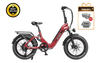
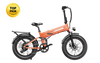

Daily Commutes & Errands
Think about your usual route, stops, and what you carry. Compare riding position, battery capacity, lights, and rack compatibility for trips to work and around town.
Explore Commuter EbikesYou are $99.00 away from Free Shipping!
🔥 Weekend Offer Ends In:
Your cart is currently empty.


 Free, Fast Shipping
 14-Day Free Trial
 2-Year Warranty


Beyond powerful - Full Suspension Comfort

$1,099.00Save $100.00
Regular price
$1,199.00
Save $100.00All-Terrain
Full Suspension
95 Nm
Torque Beast
440 lbs
Max Load
NFC
Tap & Go


 Free Pet Kit (Worth $144)
The Best Comfort Folding Fat Tire Ebike
$1,399.00Save $100.00
Regular price
$1,499.00
Save $100.00Full Suspension
Comfort
90 Miles
Max Range
Torque Sensor
Smooth Ride
NFC
Tap & Go
 Free Front Basket (Worth $89)
Foldable. Powerful. Built for Every Ride.
$899.00Save $100.00
Regular price
$999.00
Save $100.001000W
Peak Motor
45 Miles
Max Range
600Wh
Battery
28 MPH
Top Speed


$1,399.00
1500W
Peak Power
40/80 Miles
Max Range
330 lbs
Max Load
Dual Battery
Available

$899.00Save $300.00
Regular price
$1,199.00
Save $300.001400W
Peak Motor
55 Miles
Max Range
692Wh
Long Range
Step-Through
Easy Access

 Free Rearview Mirror (Worth $69)
Real-World Range, Built for Every Ride.
$1,199.00
1800W
Peak Power
50/100 Miles
Max Range
Full Suspension
Comfort Ride
Dual Battery
Available


$1,499.00
45 lbs
Lightweight
85 Miles
Max Range
Sensor Switch
Torque and cadence
27.5 x 2.2"
Kenda Tire


$1,699.00
100 Miles
Tested Range
440 lbs
Max Load
Sensor Switch
Torque and cadence
Premium Tektro
Hydraulic Brakes


Best Budget Mid-Drive All-Terrain eBike
$1,299.00
105 N·m
Torque
28 MPH
Top Speed
60 Miles
Max Range
26x4"
Fat Tires


 Free Front Basket (Worth $89)
Great Value City E-bike for Daily Commutes.
$899.00
500W Motor
1200W Peak Power
50 Miles
Max Range
468Wh Battery
Removable Power
Front Suspension
Comfort Ride
Free, Fast Shipping
14-Day Free Trial
2-Year Warranty


Start with where you ride, how you store your bike, and what feels comfortable. Explore a starting point below, then compare the details that matter for your everyday rides.
Think about your usual route, stops, and what you carry. Compare riding position, battery capacity, lights, and rack compatibility for trips to work and around town.
Explore Commuter EbikesIf space is part of your decision, explore a folding frame. Check folded dimensions against your storage area and its opening, and consider the bike’s weight before lifting.
Explore Folding EbikesMatch the bike to the surfaces you plan to ride. Compare tires, suspension, and brakes, then check the model’s intended use before heading onto trails.
Explore Off-Road EbikesA step-through frame offers a lower frame opening. Compare the size chart, reach, and saddle adjustment to find a riding position that works for you.
Explore Step-Through EbikesThese are starting points, not separate boxes. One ebike may fit several needs: a folding model can also have a step-through frame and suit your daily commute.
Once you have a shortlist, compare how each bike fits your body, your route, and your daily routine.
On smaller screens, scroll sideways to read the full table.
| Your Priority | What to Compare | How to Use It |
|---|---|---|
| Fit & Comfort | Rider-height guidance, inseam measurements, reach, and saddle adjustment. | Use the size chart as a starting point. Consider how comfortably you can get on, reach the controls, and stop. A low frame opening does not guarantee the right fit. |
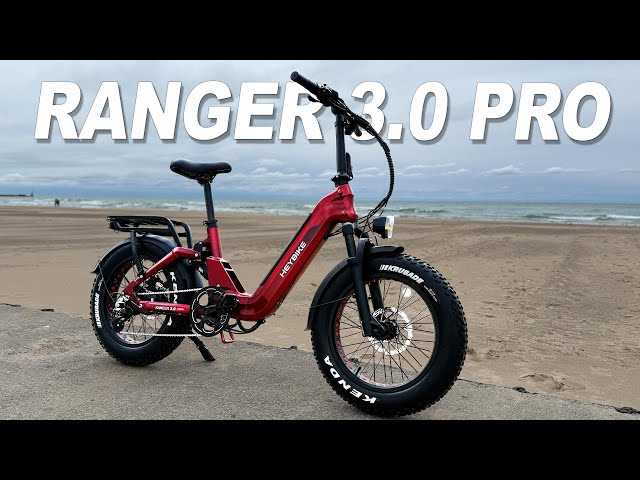
| Storage & Handling | Bike weight, overall dimensions, and folded dimensions where applicable. | Measure your storage opening and lifting space. For a folding example, check the dimensions of Ranger 3.0 Pro against your own measurements. Folding saves space, but does not necessarily make a bike easy to carry. |
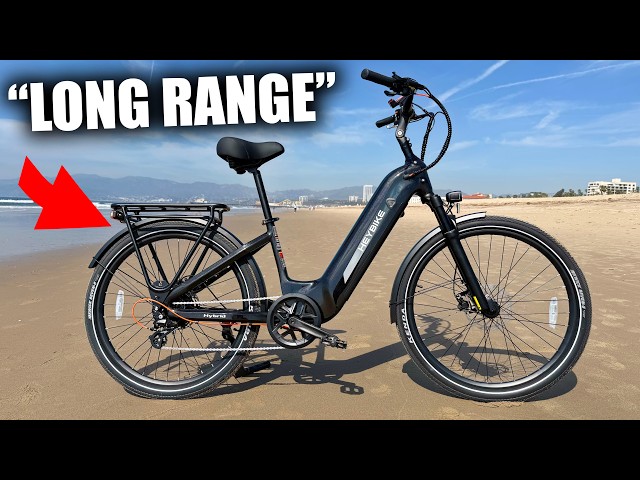
| Distance Between Charges | Battery capacity in Wh, listed range, and the conditions behind that range. | Allow for hills, speed, assist level, and load. The 864Wh battery on Hybrid is one capacity reference, not a guarantee of how far you will ride on a charge. |
| Roads & Ride Feel | Tires, suspension, brakes, pedal-assist response, and intended riding conditions. | Match the bike to the surfaces you use most. Fat tires or suspension alone do not make every trail suitable. A test ride can help you assess handling and how the assistance responds. |
Check each model’s sizing and load limits before choosing, including any separate limits for racks and accessories.
 Electric Bike Report
 Scott Hardesty
 Electric Bike Report
 TailHappyTV
Your ebike will arrive partially assembled. There are just a few pieces to put into place once you take the bike out of the box. For unboxing and setup instructions, please follow the guides on our YouTube Channel
You can ride in light rain and don't have to worry about damage caused by spray from wet roads and raindrops. We don't recommend riding ebikes in heavy rain or overly wet environments. As for the waterproof level, Heybike ebikes meet IPX4 standards; the motor, battery, and display meet IP64 standards. The Mars 3.0 and the Ranger 3.0 Pro ebikes meet IPX5 standards, and the motor, battery, and display meet IP65 standards.
If your ebike runs out of battery, you can simply continue riding. The motor on the ebike only assists your pedaling (instead of doing all the work), so you can continue riding as usual without the pedal assist.
There is no single type of ebike that works for every ride. At Heybike, our lineup covers different ways of riding, from folding bikes that are easier to store to fat-tire and full-suspension models built to handle rougher surfaces.
For daily trips around town, take a look at our commuter ebikes and cruiser ebikes. If getting on and off easily or fitting your bike into a smaller space matters, our step-through ebikes and folding ebikes are worth a look.
When the route gets rougher, fat tire ebikes, full-suspension ebikes and off-road ebikes take different approaches to comfort, traction and control. We also offer moped-style ebikes for a more distinctive ride, long-range ebikes for riders who want to go farther between charges, and mid-drive ebikes for those looking for a different motor setup.
The best Heybike depends on how you plan to ride. Instead of choosing by one specification, think about the riding experience you want and the terrain, distance and convenience that matter most to you.
Need a versatile folding ebike?
Ranger 3.0 Pro combines a folding frame with 20×4-inch fat tires, full suspension and a torque sensor. It makes sense for riders who want one bike that balances comfort, portability and everyday versatility.
Ride rougher or more varied terrain?
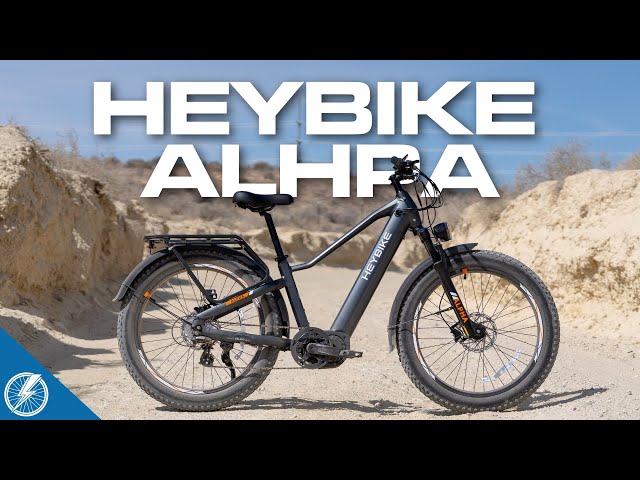
Mars 3.0 is built around all-terrain riding, with fat tires, full suspension and 95 N·m of torque in a folding design. For riders who specifically want a mid-drive setup, ALPHA takes a different approach with a mid-drive motor, 26×4-inch fat tires and 105 N·m of torque.
Want a lighter, easier-to-handle ebike?
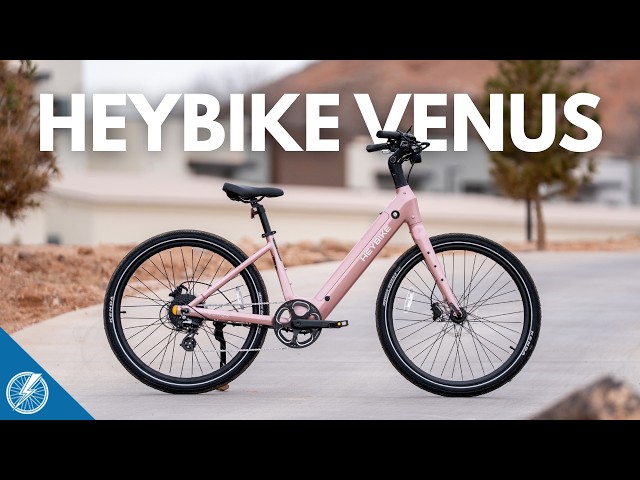
Venus weighs just 45 lb and combines a lightweight design with commuter and cruiser characteristics. It is a better fit for riders who don't want the weight and bulk of a full-size fat-tire or moped-style ebike.
Ride long distances regularly?
Hybrid is designed around extended-range commuting, with a claimed range of up to 100 miles. It is worth considering if reducing charging frequency is more important to you than having a folding or fat-tire setup.
If you're still deciding, start with the type of riding you do most often. The right Heybike is the one that fits your everyday use—not simply the one with the biggest numbers.
Think about your riding needs before comparing individual models. Motor output affects how the bike handles hills and acceleration, while battery capacity plays an important role in range. Tire size, suspension, brakes, frame design and riding position can also change how an ebike feels on the road or trail. When shopping for an ebike for sale, consider the complete setup rather than choosing based on a single specification.
Electric bike prices vary depending on the motor, battery, components and design. At Heybike, we offer options for different budgets, from lightweight everyday bikes like the Venus to higher-spec models like the Ranger 3.0 Pro and ALPHA. When choosing an ebike for sale, consider what you actually need from your ride rather than simply choosing the lowest price.
A good commuter ebike should fit your daily route, not simply have the highest power or longest range. Consider your typical distance, road conditions, riding position, battery range and how easily you can handle or store the bike. If most of your rides are on paved streets, prioritize comfort and practicality; longer or hillier commutes may call for more range, wider tires or suspension.
Yes. Fat tire electric bikes are well suited to all-terrain riding because their wider tires provide better traction and stability on loose or uneven surfaces. They can handle a mix of pavement, gravel, dirt and sand, making them a versatile choice when your rides take you beyond smooth roads.
In the U.S., electric bikes are commonly grouped into Class 1, Class 2 and Class 3. Class 1 provides pedal assistance without a throttle, while Class 2 can provide motor assistance through a throttle. Class 3 provides pedal assistance at higher speeds. Specific requirements and where each class can be ridden vary by state and local jurisdiction, so check the regulations that apply to your area.
Usually, you don't need a special license to ride an ebike, but requirements vary by state and can depend on the bike's class, speed and rider age. Before riding, check the rules where you live. Our Ebike Laws by State guide covers state-specific requirements and regulations.