

Choosing between a 500W and 750W e-bike sounds simple at first. One has more power, so it should be better. But once you start looking at real bikes, the answer is not that clean.
A 750W e-bike usually gives you more help on hills, stronger acceleration, and more support when you are carrying extra weight. A 500W e-bike is often enough for commuting, everyday riding, and moderate terrain, and it usually makes more sense if you care about efficiency, price, and a smoother ride.
That is why this is not really a question of which number is bigger. It is a question of what kind of riding you actually do.
If most of your rides are on city streets, bike paths, and normal neighborhood roads, a 500W e-bike may already be all you need. If you regularly deal with steep hills, heavier loads, or want stronger assistance with less effort, a 750W bike is easier to justify.
In this guide, we will break down the real difference between 500W and 750W e-bikes, what wattage actually tells you, and what else you should look at before deciding.

500W vs 750W E-Bike
For many riders, a 500W e-bike is enough.
It works well for commuting, errands, casual weekend rides, and most flat-to-moderate terrain. It usually costs less, uses power more efficiently, and still gives you plenty of assistance for everyday riding.
A 750W e-bike makes more sense when your rides are more demanding. That usually means steeper hills, more cargo, more rider weight, or a stronger preference for quick acceleration and lighter pedaling effort.
If you want the shortest possible answer, it looks like this:
- Choose 500W for balanced daily riding.
- Choose 750W for more demanding terrain and heavier use.
But do not stop there. Wattage matters, but it does not tell you everything about how an e-bike will feel once you are actually riding it.
What Wattage Tells You and What It Doesn’t
Wattage tells you how much motor power an e-bike is built to deliver. In simple terms, a 750W motor has more output than a 500W motor.
That part is straightforward.
What confuses many buyers is assuming that wattage alone tells them how fast, strong, or useful a bike will feel in real use. It does not.
Two bikes can have different power ratings and still feel closer than you expect on the road. That is because real-world performance also depends on things like torque, motor type, sensor setup, battery size, rider weight, terrain, and how the bike is tuned.
This is especially important now because many brands do not present motor output in exactly the same way. Some list a standard motor rating and a higher peak output. So when you compare two bikes, you are not always comparing one clean number to another.
The practical takeaway is simple: wattage is an important starting point, but it should not be the only thing you look at. It helps to understand how the e-bike motor, battery, and overall setup work together.
How 500W and 750W Feel Different in Riding
The difference between 500W and 750W usually shows up less in theory and more in the situations where the bike has to work harder.
Speed and Acceleration
A 750W e-bike usually feels stronger when starting from a stop. It gets up to speed more easily and has more reserve power when you want quicker acceleration.
That matters most in stop-and-go riding, when merging into traffic, or when you just prefer a stronger push from the motor.
A 500W e-bike is still enough for many riders. If your riding is steady and your route is not especially demanding, you may not feel a huge gap in normal daily use. But if you compare the two back to back, the 750W setup usually feels more effortless.
Hills and Heavier Loads
This is where the gap becomes more obvious.
If you ride in a hilly area, carry groceries, use a rear rack often, or want the bike to stay strong under load, 750W is usually the safer choice. It gives the motor more room to keep helping when the ride gets harder.
That does not mean a 500W bike cannot handle hills. Many can. But the experience depends on the full setup. Moderate hills are one thing. Long or steeper climbs are another.
Range and Battery Draw
Many people assume a 500W bike always has better range. That is often true in general, but not always in practice.
A 500W motor usually uses less power under similar riding conditions, which can help with efficiency. But range is not decided by motor wattage alone. Battery size, assist level, rider weight, terrain, throttle use, wind, tires, and riding style all matter.
So if you are comparing range, do not ask only whether the bike is 500W or 750W. Ask how large the battery is and how the bike is meant to be used. For a deeper look, see our guide to e-bike batteries and range.
Why Torque and Motor Type Matter as Much as Wattage
This is the part many older comparison articles leave out.
Wattage tells you part of the story. Torque tells you another part that riders often feel more directly.
Torque affects how the bike pulls from a stop, how it responds on hills, and how it handles extra load. A bike with stronger torque usually feels more capable when the ride gets harder. If you want a clearer explanation, read more about torque vs. speed on an e-bike.
That is why two bikes with different watt ratings can still surprise people once they ride them. A lower-watt bike with a better motor setup or stronger torque delivery can feel more useful than expected, especially on mixed terrain.
Motor type matters too.
A mid-drive motor and a hub motor do not deliver power in the same way. A mid-drive system works through the bike’s gearing, which can make it feel better on climbs and more natural when pedaling. A hub motor is often simpler and more direct, which many riders like for everyday use.
So if you are only looking at 500W vs 750W, you may be missing a more important question: how is that power actually being delivered?
500W Mid-Drive vs 750W Hub Motor: A Better Comparison for Some Riders
For some buyers, this is the comparison that matters more.
A basic 500W commuter and a 750W commuter are easy enough to compare. But once you bring in motor type, things get more interesting.
A 500W mid-drive can feel more capable than many people expect, especially on climbs or varied terrain. Because it works through the bike’s gears, it can make better use of the available power. That often leads to a smoother and more controlled ride, especially for riders who pedal actively.
A 750W hub motor usually feels more straightforward. It gives you stronger direct assistance and is often the better fit if you want simple, noticeable power for commuting, hills, or carrying extra weight.
If you want to compare the two systems more closely, read our guide on mid-drive vs. hub motor e-bikes.
So if your question is, “Which one is stronger?” the answer is not always as simple as “750W wins.”
If your real priority is climbing feel, control, and efficient power delivery, a 500W mid-drive may make more sense.
If your priority is stronger motor support with less effort and a more obvious power boost, a 750W hub motor may be the better fit.
Is 500W Enough for Most Riders?
Yes. For many riders, it is.
A 500W e-bike is usually enough if your riding looks like this:
- daily commuting
- running errands
- neighborhood rides
- bike paths and paved routes
- moderate hills
- lighter loads
- riders who want balanced assistance instead of maximum output
This is why 500W bikes remain popular. They are often the sweet spot for riders who want an e-bike to make normal riding easier, not turn every ride into a power test.
A good 500W bike can still feel quick, useful, and enjoyable. It does not need to be the most powerful option to be the right one.
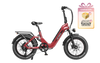
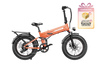
If your main goal is comfortable daily riding, a commuter-style model like Heybike Cityrun is the kind of 500W setup that makes sense. If you want a 500W bike that feels more capable on mixed terrain, a model like Heybike ALPHA makes more sense because the conversation shifts from pure wattage to how the power is delivered.
When 750W Is Worth It
A 750W e-bike is worth paying for when you know you will actually use the extra power.
That usually means one or more of these:
- you ride frequent steep hills
- you carry cargo often
- you want stronger starts from traffic lights or intersections
- you prefer lighter pedaling effort
- you are a heavier rider and want more support under load
- you want the bike to feel less strained in demanding conditions
This is where 750W starts to feel less like an upgrade for the sake of specs and more like a practical choice.
It is not that every rider needs 750W. Many do not. But if your riding conditions are tougher, the extra reserve power can make the bike feel easier and more stable to live with over time.
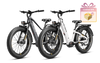
If that sounds closer to how you ride, a model like Heybike Hybrid is a more natural fit.
Which One Makes More Sense for Commuting?
For most commuters, 500W is enough.
If your route is mostly paved, your cargo is light, and your area is not especially hilly, a 500W commuter e-bike usually gives you what you need without adding more power than the job calls for.
That is one reason a model like Cityrun fits this conversation well. It is the kind of bike that matches everyday commuting needs rather than trying to impress with a bigger number first.
If your commute includes more climbing, longer distances, or a stronger preference for speed and reserve power, a 750W commuter may be the better fit.
The main point is not that one is always better. It is that commuting itself can mean very different things depending on where and how you ride.
Which One Makes More Sense for Hills?
If hills are a real part of your riding, 750W is usually the easier answer.
The extra power gives you more support on climbs and helps the bike stay stronger when the grade increases. That matters even more if you are also carrying weight.
But this is also the place where motor type matters a lot. A well-designed 500W mid-drive can still make sense for hilly riding because it can use the bike’s gearing more effectively. So if you care about climbing performance, do not compare wattage in isolation.
This is one of the few cases where a lower-watt bike may still be the smarter choice if the rest of the system is built for that kind of riding.
Check Local E-Bike Rules Before You Buy
Before you decide, make sure the bike fits where you plan to ride it.
E-bike rules are not only about motor power. They also involve speed class, throttle setup, and local access rules. A bike that makes sense for your riding style still needs to make sense for your local roads, bike paths, and trail access.
That is especially important if you are leaning toward a more powerful setup or comparing bikes with different class options.
This part does not need to be complicated. Just do not assume that the same bike is treated the same way everywhere.
Which Heybike Model Fits Each Riding Style?
If you are trying to match this comparison to actual bikes, the easiest way is to think by riding style, not just wattage.
- If you want a balanced commuter for normal daily riding, Cityrun makes sense.
- If you like the idea of 500W but want something that feels more capable and more confident on mixed terrain, ALPHA is the better fit.
- If you want more reserve power for hills, heavier use, or stronger day-to-day assistance, Hybrid is the more natural fit.
Choose by riding style first, then compare the motor setup, then compare the rest of the bike. That is a better buying process than choosing the bigger number and hoping it turns out to be the right fit.
FAQ
Is a 500W e-bike enough for hills?
It can be enough for moderate hills, especially if the bike has strong torque and a well-matched motor setup. For steeper or longer climbs, 750W usually gives you more support.
Is a 750W e-bike always faster than a 500W e-bike?
Not always in every real riding situation. A 750W bike usually has stronger acceleration and more headroom, but actual speed and ride feel also depend on class settings, terrain, rider weight, and how the bike is tuned.
Does a 500W e-bike get better range than a 750W e-bike?
Often, yes, but not automatically. Range also depends on battery size, assist level, terrain, rider weight, and how you ride.
Is 500W enough for commuting?
For many commuters, yes. If your route is mostly paved and not too steep, 500W is often enough for comfortable daily riding.
Should I choose torque or wattage first?
Neither one should be viewed alone. Wattage tells you part of the story, but torque and motor type often tell you more about how the bike will actually feel on the road.
A 500W e-bike is not automatically the weaker choice, and a 750W e-bike is not automatically the smarter one.
For many riders, 500W already covers the riding they actually do. It works well for commuting, daily use, and moderate terrain, and it often gives a better balance of cost, efficiency, and usability.
A 750W bike becomes easier to justify when the ride gets more demanding. Hills, cargo, stronger acceleration, and heavier use are where the extra power starts to make a real difference.
If you are deciding between the two, do not just compare wattage. Look at the kind of riding you do, how much help you want from the motor, whether hills are part of your route, and how the rest of the bike is built.
That will usually lead you to a better choice than the spec sheet alone.

Share:
How To Test An EBike Controller At Home
Ohio Ebike Laws and Regulations: What You Need to Know