


Electric bikes and mopeds solve similar problems, but they are not the same vehicle. The difference is not only speed. It is how the vehicle is powered, how it is classified, where you can ride it, and what kind of ownership rules come with it.
An electric bike keeps the basic bicycle format: pedals, a battery, and an electric motor that helps the rider through pedal assist, throttle, or both. A moped is closer to a small motor vehicle and may require a license, registration, insurance, or road-use equipment depending on local law.
There is also a newer category many riders compare in 2026: the moped style ebike. It looks and feels more like a small moped, but it still keeps the core setup of an ebike when it has pedals and follows applicable ebike rules.

Electric Bike vs Moped
If you only remember one thing: an electric bike is usually treated like a bicycle-style vehicle, while a moped is usually treated more like a motor vehicle.
That difference affects where you can ride, whether you need paperwork, how easy the vehicle is to store, and how much maintenance you should expect.
| Feature | Electric Bike | Moped | Moped Style Ebike |
|---|---|---|---|
| Pedals | Yes | Sometimes, but many modern mopeds are not built around pedaling | Yes |
| Power source | Battery and electric motor | Gas engine or electric motor | Battery and electric motor |
| Typical ride feel | More bicycle-like | More motor-vehicle-like | More relaxed and moto-inspired |
| Common use | Commuting, errands, recreation, bike-lane routes where allowed | Road riding and faster urban travel | Comfort cruising, commuting, errands, weekend rides |
| License or registration | Often not required for compliant ebikes, but rules vary | Often required, depending on state and vehicle type | Depends on class, speed settings, and local rules |
| Storage | Usually easier | Usually harder | Heavier than a regular ebike, but usually easier than a moped |
What Is an Electric Bike?
An electric bike is a bicycle with a motor and battery. Depending on the model, the motor may help only when you pedal, or it may also work through a throttle.
This is where people often get confused. Not every ebike works the same way. Some are pedal-assist only. Some include a throttle. Some are built for relaxed commuting, while others are designed for fat-tire riding, folding storage, cargo, or rougher roads.
In the U.S., many states use a three-class system:
- Class 1: Pedal assist only, with assistance up to 20 mph.
- Class 2: Throttle assistance, commonly limited to 20 mph.
- Class 3: Pedal assist up to 28 mph in many places.
The class matters because it can affect bike-lane access, trail access, age limits, helmet rules, and where the bike is allowed. Rules vary by state and city, so check local regulations before riding. For a deeper breakdown, read our guide to electric bike classes.
If you are still comparing frame styles, motors, and riding uses, you can also browse Heybike electric bikes.
What Is a Moped?
A moped is usually closer to a small motor vehicle than a bicycle. It may use a gas engine or an electric motor. Some older mopeds had pedals, but many modern mopeds are not designed around pedaling in the way an ebike is.
Mopeds can make sense if you need faster road travel and are comfortable with motor-vehicle rules. Depending on where you live, that may include a license, registration, insurance, helmet requirements, and restrictions on where you can ride.
The upside is road-speed convenience. The downside is ownership complexity. A moped is usually heavier, harder to store, and less flexible around bike lanes, shared paths, apartment storage, and mixed-use riding.
If licensing is your main concern, read Do You Need a License for an Electric Bike?.
What Is a Moped Style Ebike?
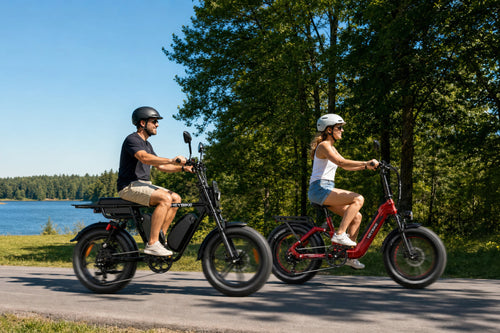
A moped style ebike borrows the look and comfort of a small moped but keeps the basic ebike format. It usually has pedals, fat tires, a long seat, throttle support, and a lower, more relaxed riding position.
Common features include:
- A long bench-style seat
- Fat tires
- Throttle support
- Front or full suspension
- A larger headlight
- A moto-inspired frame
- A more planted ride feel
This category is useful for riders who like the comfort and style of a moped but do not want to move fully into moped ownership. It works well for errands, short commutes, neighborhood rides, and weekend cruising.
The key detail is legal classification. “Moped style” describes the design. It does not automatically make the vehicle a moped, and it does not automatically make it legal everywhere as an ebike. The actual rules depend on motor output, assisted speed, throttle use, riding mode, and local law.
Key Differences Between Electric Bikes and Mopeds
The best choice depends less on the label and more on how you plan to ride.
Pedals and Riding Input
Electric bikes have functional pedals. Even if the bike has a throttle, it still gives you the option to pedal, use pedal assist, or ride with less motor support when you want more exercise.
Mopeds are usually not built around that kind of riding. They are designed more for motor-powered travel from the start.
Speed
Many ebikes are built around 20 mph or 28 mph assist limits, depending on class. Mopeds may travel faster, but that speed usually comes with more road-focused rules.
This is why “faster” is not always better. For short city routes, an ebike may be more convenient if it can use bike lanes or easier parking where allowed. For longer road routes, a moped may make more sense.
Where You Can Ride
Compliant ebikes may be allowed in bike lanes or on certain shared-use paths, depending on local rules. Mopeds are usually treated more like motor vehicles and are often kept to streets.
Before buying, think about your actual route. A vehicle that is faster on paper may not save time if it cannot use the paths or lanes you rely on.
License, Registration, and Insurance
Many compliant electric bikes do not require a license, registration, or insurance. Mopeds often do.
This is one of the biggest ownership differences. If you want a simple daily ride with fewer paperwork requirements, an ebike is usually easier. If you want road-speed travel and do not mind the added rules, a moped may be a better fit.
Weight and Storage
Electric bikes are usually easier to store than mopeds. Some can fit in apartments, garages, offices, or car trunks depending on frame style.
Mopeds are heavier and usually need more dedicated parking space. Moped style ebikes sit between the two. They are often heavier than standard commuter ebikes, but still easier to manage than a full moped.
Maintenance
Electric bikes use a mix of bicycle and electrical components: tires, brakes, chain or drivetrain, battery, motor, controller, and display. Maintenance is usually closer to bike ownership.
Gas mopeds may require engine-related maintenance. Electric mopeds avoid fuel-system work, but they can still come with motor-vehicle rules, heavier parts, and more limited service options depending on the model.
Speed, Range, and Daily Riding
A moped may be faster on open roads. An ebike may be easier for short daily trips.
For example, a rider with a five-mile commute through bike lanes, stop signs, and limited parking may get more practical value from an ebike. A rider who needs to cover longer road routes at higher speeds may prefer a moped.
Range also works differently. Ebike range depends on battery capacity, rider weight, hills, tire pressure, weather, assist level, speed, and throttle use. Riding at higher speeds or using throttle often will drain the battery faster.
For riders who want more comfort and range without switching to a moped, a moped style ebike can be a useful compromise. Look for a larger battery, stable tires, strong brakes, and suspension that matches the way you ride.
Heybike Saturn: A Moped Style Ebike Option
If you like the look and comfort of a moped but want the flexibility of an ebike, Heybike Saturn is built for that use case.
Saturn uses a 1000W hub motor with 1800W peak power and 95 N·m of torque. That gives it strong pull when starting from a stop, climbing moderate hills, or riding with extra weight.

It also offers up to 90 miles of max range with the dual-battery setup. The single-battery version is designed for shorter rides, while the dual-battery option gives more room for commuting, weekend rides, and fewer charging stops.
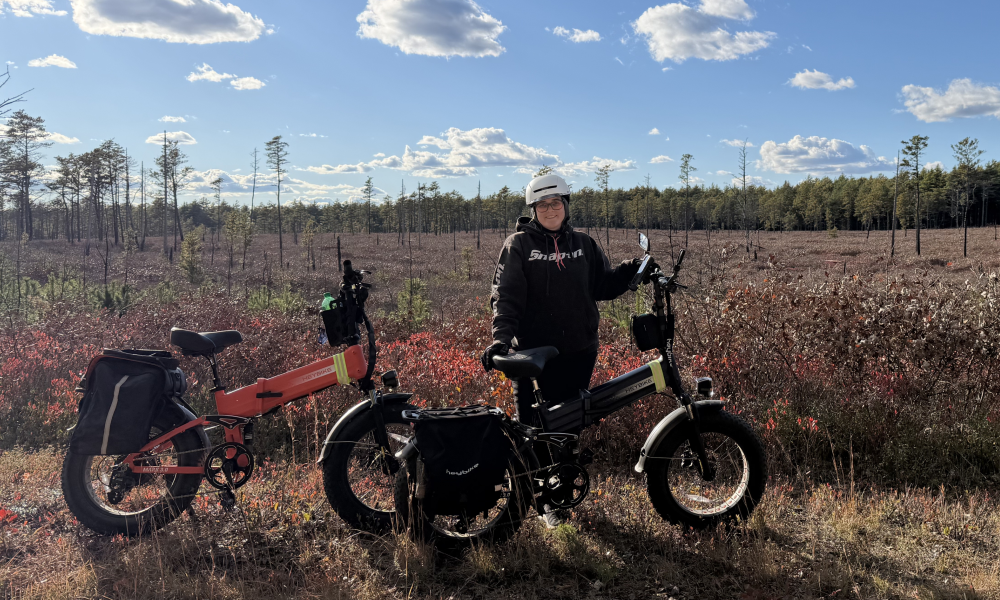
For comfort and control, Saturn uses full suspension, 20 x 4.0" fat tires, and 2-piston hydraulic disc brakes with motor cut-off. It also comes with daily-use details such as a rear rack, fenders, rear-view mirrors, and a 330 lbs max load capacity.
Saturn is a good fit if you want a vintage-style moped ebike for commuting, errands, and casual long rides. It is not the best choice if your top priority is a lightweight bike that pedals exactly like a traditional bicycle.
For more details, read New Saturn Electric Bike: A Vintage Ride with Modern Power.
Which One Should You Choose?
Choose an electric bike if you want bike-like flexibility, easier storage, and fewer ownership requirements. It is often the better choice for short commutes, errands, recreational rides, and routes that use bike lanes where allowed.
Choose a moped if you need higher road speeds and are comfortable with license, registration, insurance, parking, and road-use rules.
Choose a moped style ebike if you want the comfort and look of a moped-style ride without fully moving into moped ownership. This is the best fit for riders who want a wider seat, fat tire stability, throttle-friendly riding, and everyday ebike practicality.
FAQs
Is an electric bike the same as a moped?
No. An electric bike has pedals and is usually regulated as a bicycle-style vehicle. A moped is usually treated more like a motor vehicle and may require a license, registration, or insurance depending on local rules.
Can an electric bike have a throttle?
Yes. Class 2 electric bikes commonly include throttle assistance up to 20 mph. Rules vary by state, and some places limit where throttle-assisted ebikes can be used.
Do you need a license for an electric bike or moped?
Many compliant electric bikes do not require a license in the U.S., but mopeds often do. Local rules vary, so check your state and city before riding.
Is a moped style ebike legal?
A moped style ebike can be legal, but “moped style” only describes the design. Legal status depends on motor power, assisted speed, throttle use, riding mode, and local regulations.
Is a moped faster than an ebike?
In many cases, yes. Mopeds often have higher road speeds than class-limited ebikes. An ebike may still be more convenient for short urban trips if it is easier to store and can use bike lanes where local rules allow.
Which is better for commuting, an ebike or a moped?
An ebike is often better for short commutes, bike-lane routes, errands, and easier storage. A moped may be better for longer road routes where higher speed matters more than bike-like flexibility.

Share:
12 Best RV Parks & Campgrounds in Florida
Best Moped Style Ebikes in 2026: What to Look for Before You Buy