


An e-bike spec sheet can look precise while still leaving the most important question unanswered: how will the bike actually fit your ride? A higher number is not automatically a better bike. Motor power, torque, battery capacity, controller tuning, gearing, tire size, weight, brakes, and frame design work as a system.
This guide explains the numbers shoppers see most often and shows how to compare them without relying on one headline specification.
Quick answer: Watts describe power, torque describes rotational force, voltage describes the battery system's electrical potential, amp-hours describe charge capacity, and watt-hours provide the most useful battery-size comparison. None of these numbers alone predicts acceleration, hill climbing, range, or ride quality.
E-Bike Specifications at a Glance
| Specification | What it tells you | What it does not tell you by itself |
|---|---|---|
| Nominal watts | A motor's sustained power rating | Exact acceleration, hill performance, or legal classification |
| Peak watts | Short-duration maximum output under specified conditions | Power the motor can sustain continuously |
| Torque (N·m) | Rotational force available at the motor | Complete hill-climbing ability or how natural assistance feels |
| Voltage (V) | Electrical potential of the battery system | Battery capacity or range |
| Amp-hours (Ah) | Amount of electrical charge stored | A fair capacity comparison across batteries of different voltages |
| Watt-hours (Wh) | Approximate total battery energy: volts × amp-hours | Guaranteed real-world mileage |
| Claimed range | Manufacturer's maximum estimate under stated or favorable conditions | Mileage every rider will achieve |
| Payload | Maximum combined rider-and-cargo load | Rear-rack capacity or ideal rider fit |
Motor Watts: Nominal Power vs Peak Power
Watts measure power. On an e-bike listing, you may see nominal, rated, sustained, maximum, or peak wattage. Those terms should not be treated as interchangeable.
Nominal or rated power generally describes the output a motor is designed to provide on a sustained basis under specified conditions. Peak power is the higher output the electrical system may deliver for a shorter period, such as during acceleration or a climb. The duration and conditions behind peak figures vary, so peak wattage is most useful when the manufacturer also provides a nominal rating and enough context to compare like with like.
A 750W label does not guarantee that two bikes will accelerate or climb identically. Controller programming determines how quickly power arrives. Battery voltage and current limits affect what the system can supply. Wheel diameter, gearing, total weight, tire resistance, temperature, and rider input also influence performance.
When comparing models, start with nominal power, then examine peak output, torque, sensor type, gearing, total weight, and intended use. That fuller picture is more useful than choosing the largest wattage printed on a product page.
E-Bike Torque: Why Newton-Meters Matter
Torque is rotational force and is normally listed in newton-meters, or N·m. In practical terms, torque helps an e-bike start from a stop, maintain assistance on an incline, and move a heavier combined rider-and-cargo load.
Higher published torque can be valuable for steep routes, frequent starts, loose surfaces, and cargo. But torque at the motor is not the whole story. A mid-drive motor sends power through the bicycle's drivetrain, allowing the rider and motor to use the gears. A hub motor drives the wheel directly. These systems can feel different even when their torque ratings appear similar.
Delivery matters too. A well-tuned torque sensor responds to how hard the rider pedals and can make assistance feel progressive. A cadence sensor primarily detects that the cranks are turning and may deliver assistance in more distinct steps. Neither approach is universally best: riders often prefer torque sensing for a natural ride, while cadence sensing can make it easier to receive strong assistance with lighter pedal pressure.
Battery Voltage, Amp-Hours, and Watt-Hours
Battery listings often present several numbers together, such as 48V 15Ah. Each number answers a different question.
Voltage (V)
Voltage describes electrical potential. Many full-size e-bikes use 36V, 48V, or 52V systems. A higher-voltage system can support a given power level with less current, but voltage alone does not tell you how much energy the battery stores or how far the bike will travel.
Amp-hours (Ah)
Amp-hours describe charge capacity. Comparing Ah only works when the battery voltages are the same. A 20Ah battery is not automatically larger in total energy than every 15Ah battery because voltage also matters.
Watt-hours (Wh)
Watt-hours are the most useful single number for comparing battery energy across different voltages:
A 48V 15Ah battery is approximately 720Wh. A 52V 15Ah battery is approximately 780Wh. The second battery stores more nominal energy even though both are rated at 15Ah.

Watt-hours still do not equal miles. They describe the size of the energy reservoir, while efficiency determines how quickly that energy is used.
Why Battery Size Does Not Equal Range
Range is the result of battery energy divided by energy consumption. In controlled conditions, a larger battery usually creates more range potential. In the real world, consumption changes continuously.
The biggest variables include:
- pedal-assist level and throttle use;
- rider, passenger, and cargo weight;
- hills, starts, and surface conditions;
- cruising speed and acceleration habits;
- headwinds and low temperatures;
- tire width, tread, and inflation pressure;
- drivetrain condition and brake drag;
- wheel size, motor efficiency, and controller tuning.
This is why an “up to” figure should be treated as a best-case manufacturer estimate, not a guaranteed commute distance. If range is important, compare watt-hours first, read the test conditions behind the claim, and leave a practical reserve for weather, detours, battery aging, and higher assist levels.
A Worked Example: Reading a Complete Specification Set
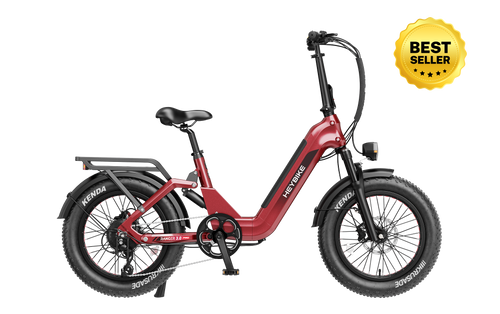
The current Heybike Ranger 3.0 Pro listing provides a useful example of why specifications should be read together. It combines a 750W nominal rear hub motor with up to 1,400W peak output, 80 N·m of torque, a 720Wh battery, torque-sensing pedal assist, full suspension, 20 × 4-inch tires, and a 440-pound maximum payload. Heybike lists a maximum range of up to 90 miles.
The headline range does not stand alone. The 720Wh battery establishes the energy available; the torque sensor and controller influence how assistance is delivered; the fat tires and full suspension prioritize traction and comfort; and the high payload rating supports riders who carry more gear. The same features that make the bike capable and comfortable also affect weight and energy use.
That is the correct way to read an e-bike: not as a contest between isolated numbers, but as a set of choices designed for a particular rider.
Hub Motor vs Mid-Drive: Placement Changes the Ride
Motor position affects traction, maintenance, handling, and how the bike uses its gears.
Rear hub motors
A rear hub motor drives the rear wheel directly. It is mechanically separate from the bicycle drivetrain, which can simplify everyday operation and reduce the load placed on the chain and cassette. Hub-drive bikes can provide strong value and work well for commuting, recreation, folding bikes, and fat-tire designs.
Mid-drive motors
A mid-drive motor applies power at the crank and uses the bike's gears. Selecting the right gear can keep the motor operating efficiently on climbs and varied terrain. Mid-drives often provide balanced weight distribution and a bicycle-like response, but they place more force through the chain, chainring, and cassette, making correct shifting and drivetrain care especially important.
Neither architecture automatically wins. Riders should compare the complete bike and choose based on terrain, service needs, ride feel, price, and how often they carry weight or climb.

Controller and Sensor: The Specs You Feel but Rarely See
The controller regulates electrical power between the battery and motor. Its programming shapes acceleration, assist levels, throttle response, current limits, heat management, and how smoothly power starts and stops.
That is why two bikes with the same advertised motor wattage can feel very different. One may surge quickly; another may build power gradually. One may hold speed efficiently on flat roads; another may be tuned for stronger low-speed response.
The pedal-assist sensor also changes the experience:
- Torque sensor: measures pedaling force and varies assistance in response.
- Cadence sensor: detects crank rotation and activates the selected assistance level.
- Combined or switchable systems: use more than one input or allow the rider to choose a response style.
If possible, test ride the bike instead of judging ride quality from motor wattage alone.
Speed and E-Bike Class
Motor power is not the same as top speed, and top speed is not the same as legal classification. In the United States, the commonly used three-class framework distinguishes pedal-assist and throttle operation and generally uses 20 mph and 28 mph assistance limits. State and local rules can differ, including where each class may be used.
Check the bike's configured class, the way its throttle and pedal assist operate, and the rules for your route. Do not assume that a higher peak-watt figure makes a bike Class 3 or that every adjustable setting is legal on public roads.
Payload, Bike Weight, and Rider Fit
Payload usually means the maximum combined weight of the rider and cargo. It is not always the same as the rear-rack rating. A bike may support a high total payload while its rack has a much lower limit.
Bike weight affects lifting and storage, but it should be interpreted alongside equipment. A larger battery, wider tires, full suspension, reinforced frame, rack, and fenders can add weight while also adding capability. A light e-bike may be easier to carry upstairs; a heavier model may better match rough roads or higher payload needs.
Fit remains essential. Review recommended rider height, standover height, reach, saddle adjustment, and handlebar position. A powerful bike that does not fit the rider is still the wrong bike.
Brakes, Tires, and Suspension Complete the System
Motor and battery numbers receive most of the attention, but control hardware determines how confidently a rider can use that performance.
Hydraulic disc brakes typically require less lever force and self-adjust for pad wear, while mechanical disc brakes use a cable and are often simpler to adjust with basic tools. Rotor size, pad compound, tire grip, total load, weather, and maintenance all affect stopping performance.
Tire width changes comfort, traction, rolling resistance, and handling. Fat tires add volume and grip for broken pavement, gravel, sand, snow, and mixed surfaces, but they also add weight and rolling resistance. Narrower tires generally feel more efficient on smooth pavement.
Suspension improves control and comfort on uneven surfaces, but it adds weight, cost, and maintenance. Riders on rough routes may benefit from front or full suspension; riders on smooth city streets may prefer a lighter rigid design.
The Heybike electric bike collection makes these tradeoffs visible across folding, commuter, fat-tire, full-suspension, and mid-drive formats.
How to Compare Two E-Bikes in Five Steps
- Define the ride. Note your distance, hills, road surface, storage, cargo, and local rules.
- Compare complete power systems. Read nominal watts, peak watts, torque, sensor type, motor position, and gearing together.
- Compare battery energy in Wh. Do not compare Ah across different voltages without converting to watt-hours.
- Check control and utility hardware. Review brakes, tires, suspension, lights, rack rating, payload, fit, and bike weight.
- Verify the support behind the bike. Read the current warranty, replacement-parts availability, certification information, and service options before purchasing.
When browsing Heybike, use this process to narrow the category first and the model second. A commuter, folding e-bike, all-terrain fat-tire model, and mid-drive bike can all show impressive specifications while solving different problems.
Frequently Asked Questions
Is a 750W e-bike always faster than a 500W e-bike?
No. Wattage alone does not determine top speed. Controller limits, battery voltage, gearing, wheel size, total weight, aerodynamic drag, legal settings, and motor design all influence speed and acceleration.
Is more torque always better?
Not automatically. More torque can help with starts, hills, cargo, and loose terrain, but delivery and control matter. A lower-torque system with responsive tuning and suitable gearing may feel better for a rider on flatter routes.
Which is more important, Ah or Wh?
Use Wh to compare total nominal battery energy. Ah can be compared directly only when voltage is the same. Calculate Wh by multiplying volts by amp-hours.
How many watt-hours does an e-bike need?
There is no universal answer. Short, flat commutes with active pedaling may require less capacity than long routes, hills, heavy cargo, cold weather, or frequent throttle use. Compare the route and riding style before choosing a battery.
Does a bigger battery make an e-bike more powerful?
Battery capacity in Wh mainly affects energy storage and range potential. Power delivery also depends on voltage, current limits, the controller, motor, and system programming. A larger-capacity battery does not automatically increase motor output.
What specification matters most for hills?
Look at torque, motor type, nominal power, controller tuning, gearing, total load, wheel size, and battery capability together. A single wattage or torque figure is not enough to predict climbing performance.
Final Takeaway
The best e-bike spec is not the largest number. It is the combination that matches your route, rider weight, cargo, terrain, storage, and expectations.
Use nominal and peak watts to understand power, torque to understand rotational force, and watt-hours to compare battery energy. Then examine the motor position, controller, sensor, gearing, brakes, tires, suspension, payload, fit, and support behind the bike. Once those pieces are read together, the spec sheet becomes a practical buying tool instead of a wall of marketing numbers.




Share:
Heybike Hybrid Review: Long-Range Comfort for Everyday Rides