

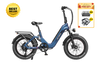
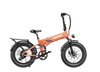

Heybike and Velotric both offer folding electric bikes built for riders who want easier storage and transportation without giving up everyday riding capability. The Heybike Ranger 3.0 Pro and Velotric Fold 1 Plus are particularly comparable because both use 750W rear hub motors, torque sensing, hydraulic disc brakes, rear racks, and folding frames.
The two bikes take different approaches to the folding category. The Ranger 3.0 Pro combines 20×4-inch fat tires with front-and-rear suspension, a 720Wh battery, and a maximum claimed range of up to 90 miles. The Fold 1 Plus uses narrower 20×3-inch tires, a 60mm front suspension fork, a 608Wh battery, and a claimed range of up to 68 miles, while weighing about 12 pounds less.
At the time of writing, the Ranger 3.0 Pro is listed at $1,499, while the Fold 1 Plus is listed at $1,499. Prices and promotions may change, so this comparison focuses primarily on the differences that affect everyday use.
Quick take
Choose the Ranger 3.0 Pro when full suspension, 20×4-inch tires and longer claimed range matter most. Choose the Fold 1 Plus when lower weight, easier transport and flexible connected features matter more.
Ranger 3.0 Pro vs Fold 1 Plus at a Glance
| Feature | Heybike Ranger 3.0 Pro | Velotric Fold 1 Plus |
|---|---|---|
| Current listed price | $1,499 | $1,499 |
| Motor | 750W rear hub | 750W rear hub |
| Peak power | 1,400W | 1,100W |
| Torque | 80 N·m | 75 N·m |
| Battery | 720Wh | 608Wh |
| Claimed range | Up to 90 miles | Up to 68 miles |
| Tire size | 20×4.0" | 20×3.0" |
| Suspension | Front + rear | 60mm front suspension fork |
| Torque sensor | Yes | Yes, with SensorSwap |
| Folding frame | Yes | Yes |
| Weight | 75 lb | 63 lb |
| Max total load | 440 lb | 450 lb |
| Rear rack capacity | 100 lb | 120 lb |
| Rider height | 4'11"–6'2" | 4'9"–6'5" |
| Connected features | Heybike App, NFC, TFT display | SensorSwap, Apple Find My, app connectivity |
| Warranty | 2 years | 2 years for electrical components; Structural coverage: check current policy for this model |
Specifications are based on the manufacturers' current product and warranty information.
Two Different Approaches to a Folding Ebike
A folding frame is the common starting point, but the Ranger 3.0 Pro and Fold 1 Plus prioritize different aspects of the riding experience.
The Ranger 3.0 Pro is built around a more substantial configuration: 20×4-inch fat tires, front-and-rear suspension, a 720Wh battery, and a 440-pound total payload. Its current official positioning emphasizes comfort, full suspension, long range, and all-terrain versatility.
The Fold 1 Plus takes a lighter and more compact approach. It uses 20×3-inch tires, a 60mm front suspension fork, a 608Wh battery, and a 63-pound published weight. Velotric positions it around portability, everyday versatility, comfort, and city-oriented riding.
This creates a useful distinction: the Ranger 3.0 Pro is closer to a folding fat-tire ebike designed for comfort and mixed terrain, while the Fold 1 Plus is closer to a lighter folding commuter designed around portability and everyday versatility.
Tire Size and Suspension
The most obvious hardware difference is the combination of tire size and suspension.
The Ranger 3.0 Pro uses 20×4-inch Kenda fat tires and a full-suspension system with a 65mm hydraulic front fork and adjustable rear air shock. This configuration gives the bike suspension at both ends and adds more tire volume for rougher pavement, gravel, dirt paths, and other mixed surfaces.
The Fold 1 Plus uses 20×3-inch all-terrain tires with a 60mm front suspension fork. Its narrower tires and front-only suspension contribute to a lighter overall design while still providing cushioning for everyday roads and light mixed terrain.
The difference is less about one suspension setup being universally better and more about what you ride. Riders who regularly encounter rougher surfaces may value the Ranger's full suspension and wider tires, while riders who spend most of their time on pavement may prefer the Fold 1 Plus's lighter format.
Motor Power and Pedal Assistance
Both bikes use 750W rear hub motors and torque sensors, but their published power figures are slightly different.
The Ranger 3.0 Pro is listed at 1,400W peak power and 80 N·m of torque. The Fold 1 Plus is listed at 1,100W peak power and 75 N·m of torque.
The Ranger's higher peak output and torque rating may be useful for riders who regularly tackle hills, carry heavier loads, or ride on surfaces where additional motor assistance is helpful.
The Fold 1 Plus uses Velotric's SensorSwap system, which allows riders to switch between torque and cadence sensing. This provides more flexibility for riders who prefer different pedal-assistance responses in different situations.
Neither motor specification tells the entire story of ride feel. Controller tuning, rider weight, gearing, wheel size, terrain, and pedal input all affect how an ebike accelerates and climbs.
Battery and Range
The Ranger 3.0 Pro has a 720Wh removable battery and a claimed maximum range of up to 90 miles. The Fold 1 Plus uses a 608Wh battery and is rated for up to 68 miles.
The difference in published range is meaningful for riders who regularly plan longer rides. At the same time, maximum range figures are not guarantees of everyday mileage. Actual range depends on assist level, throttle use, rider and cargo weight, terrain, speed, temperature, wind, tire pressure, and other factors.
For riders who use higher assist levels frequently, planning around actual riding conditions is more useful than relying solely on the maximum published range.
Portability and Storage
This is where the Fold 1 Plus has one of its clearest advantages.
The Fold 1 Plus weighs 63 pounds, while the Ranger 3.0 Pro weighs 75 pounds. That 12-pound difference matters when lifting the bike into a vehicle, moving it through a building, or carrying it up stairs.
Their folded dimensions are also similar enough to be useful for vehicle and indoor storage, but the Fold 1 Plus remains the lighter bike overall. The Ranger's larger tires, larger battery, and full-suspension system contribute to its heavier build.
For riders who fold and move their bike several times a week, weight may matter more than a small difference in folded dimensions. For riders who mostly fold the bike for occasional storage or travel, the additional weight may be less important.
Cargo Capacity and Everyday Utility
Both bikes are designed to carry more than just the rider.
The Ranger 3.0 Pro supports up to 440 pounds of combined rider and cargo weight, while its rear rack is rated for up to 100 pounds. The Fold 1 Plus supports up to 450 pounds total, with a rear rack rated for up to 120 pounds.
That gives the Fold 1 Plus an advantage in published maximum payload and rear-rack capacity. The Ranger 3.0 Pro, however, pairs its cargo capability with wider fat tires and full suspension, which may appeal to riders carrying gear beyond paved roads.
Both bikes include rear racks and fenders, making them suitable for common uses such as commuting, errands, grocery runs, and recreational riding.
Rider Fit and Frame Design
The two models also differ in sizing.
The Ranger 3.0 Pro uses a one-size folding frame designed for riders approximately 4'11" to 6'2". The telescoping stem and adjustable components provide additional fit flexibility.
The Fold 1 Plus is also a one-size model, but Velotric lists a broader rider-height range of approximately 4'9" to 6'5".
That wider published range may matter to riders near the shorter or taller ends of the spectrum. Still, frame geometry and personal fit can vary, so riders should review the manufacturers' measurements before purchasing.
Smart Features and Security
The two bikes take different approaches to connected technology.
The Ranger 3.0 Pro includes a color TFT display, Heybike App connectivity, NFC unlocking, PIN access, and over-the-air updates. These features focus on access control, ride settings, and app-based customization.
The Fold 1 Plus includes SensorSwap, app connectivity, OTA updates, and Apple Find My integration. Velotric also uses its system to provide ride tracking and other connected features.
The differences here are practical rather than simply technical. Riders who primarily want NFC access and adjustable bike settings may prefer the Ranger's approach, while Apple users who value Find My integration may place greater importance on the Fold 1 Plus.
Price, Warranty, and Service
At the time of writing, the Ranger 3.0 Pro is listed at $1,499, while the Fold 1 Plus is listed at $1,499. The listed prices are currently the same, making the feature differences more useful for comparison.
Heybike provides a two-year warranty for e-bikes purchased through its official website, excluding normal wear-and-tear items.
Velotric lists two years of coverage for electrical components and the battery. Its current five-year structural coverage names certain models but does not list Fold 1 Plus. Check current terms for coverage on the bike you purchase.
Velotric also currently promotes more than 1,600 dealer shops for its U.S. products. This may be relevant for riders who value local test rides or service access.
Warranty and service policies can change, so buyers should review the current terms before purchase.
Independent reviews help put the specifications into context.
Which Folding Ebike Fits Your Riding Style?
The Ranger 3.0 Pro and Fold 1 Plus are close enough in price and category that the decision is mainly about which combination of features you use most.
The Ranger 3.0 Pro may fit you better if you prioritize:
20×4-inch fat tires
Front-and-rear full suspension
A 720Wh battery and longer claimed range
Higher listed torque and peak power
Mixed surfaces such as gravel and dirt paths
A 440-pound total payload
NFC access and Heybike App controls
Its main tradeoff is weight. At 75 pounds, it is considerably heavier to lift and move than the Fold 1 Plus.
The Fold 1 Plus may fit you better if you prioritize:
Lower overall weight
Easier lifting and transportation
A broader published rider-height range
A higher 450-pound total payload
A 120-pound rear rack capacity
SensorSwap between torque and cadence sensing
Apple Find My integration
A more compact everyday riding setup
Its main tradeoff is a less substantial tire and suspension configuration, with 20×3-inch tires and front suspension rather than the Ranger's 20×4-inch tires and full suspension.
Ranger 3.0 Pro vs Fold 1 Plus: Which One Should You Choose?
At their current listed prices, the choice comes down primarily to how you plan to use the bike.
The Ranger 3.0 Pro is oriented toward riders who want more tire volume, full suspension, stronger published motor output, and longer claimed range in a folding format.
The Fold 1 Plus is oriented toward riders who put more value on lower weight, easier transportation, flexible rider fit, higher rack capacity, and connected features such as Apple Find My.
Neither bike is designed for exactly the same priority set. For frequent lifting and urban transportation, weight and portability may matter most. For mixed-terrain riding, suspension and tire size may matter more.
Frequently Asked Questions
Is the Ranger 3.0 Pro a fat-tire folding ebike?
Yes. It uses 20×4-inch fat tires on a folding frame, along with front-and-rear suspension and a torque sensor.
Is the Velotric Fold 1 Plus a fat-tire ebike?
The Fold 1 Plus uses 20×3-inch all-terrain tires rather than the 4-inch-wide tires used by the Ranger 3.0 Pro.
Which has the longer claimed range?
The Ranger 3.0 Pro is rated for up to 90 miles, while the Fold 1 Plus is rated for up to 68 miles. Actual range varies with riding conditions and settings.
Which bike is lighter?
The Fold 1 Plus weighs approximately 63 pounds, compared with 75 pounds for the Ranger 3.0 Pro.
Which has the larger payload?
The Fold 1 Plus has a published 450-pound maximum total payload, while the Ranger 3.0 Pro is rated for 440 pounds. The Fold 1 Plus also has a higher published rear-rack capacity at 120 pounds versus 100 pounds.
Which bike has full suspension?
The Ranger 3.0 Pro has front and rear suspension. The Fold 1 Plus uses a 60mm front suspension fork.
Do both bikes use torque sensors?
Yes. The Ranger 3.0 Pro uses a torque sensor, while the Fold 1 Plus uses Velotric's SensorSwap system, which allows riders to switch between torque and cadence sensing.
Which bike is easier to transport?
The Fold 1 Plus has the lower weight by about 12 pounds, making it easier to lift and carry. The Ranger 3.0 Pro folds as well, but its larger tires, larger battery, and full-suspension design make it heavier.
How do the warranties compare?
Heybike provides a two-year warranty for its e-bikes purchased through the official website. Velotric lists two years for electrical components and the battery. Its current five-year structural coverage applies to specified models and does not list Fold 1 Plus.
Which one is better for commuting?
Both can work for commuting, but they emphasize different qualities. The Fold 1 Plus is lighter and easier to move, while the Ranger 3.0 Pro offers wider tires, full suspension, and a larger battery. Your route, storage situation, and how often you need to lift the bike are more useful decision factors than the category label alone.
Final Takeaway
The Heybike Ranger 3.0 Pro and Velotric Fold 1 Plus are both capable folding ebikes, but they emphasize different combinations of portability, comfort, performance, and utility.
The Ranger 3.0 Pro combines 20×4-inch fat tires, full suspension, a 720Wh battery, up to 90 miles of claimed range, and an 80 N·m torque rating in a 75-pound folding package.
The Fold 1 Plus combines 20×3-inch tires, a 60mm suspension fork, a 608Wh battery, up to 68 miles of claimed range, a 63-pound weight, and SensorSwap technology in a lighter folding package.
At their current listed prices, the more useful question is which configuration matches your riding: more suspension, tire volume, and range with the Ranger 3.0 Pro, or lower weight, portability, and flexible everyday features with the Fold 1 Plus.
To compare other riding styles and frame types, explore the full Heybike electric bike collection.

Share:
Heybike vs Aventon: Mars 3.0 vs Aventure 3